Peer-to-peer coordination
Share mission state directly across network nodes.
Driif Mission OS
Orchestrate heterogeneous multi-OEM autonomous systems through one mission network. Coordinate operations across platforms, sensors and effectors, with intelligence and execution distributed to the edge.
Modern missions span heterogeneous platforms, sensors and effectors from multiple OEMs. But their intelligence, tracks and control remain split across separate systems.
As operations scale, fragmentation becomes an operational liability:
No single system holds the complete operational picture.
As autonomous fleets grow, manual coordination struggles to keep pace with the scale and speed of operations.
Autonomous systems are advancing, but operate in silos rather than as a coordinated force.
The force is becoming more autonomous. The mission still lacks a unified layer to bring it together.
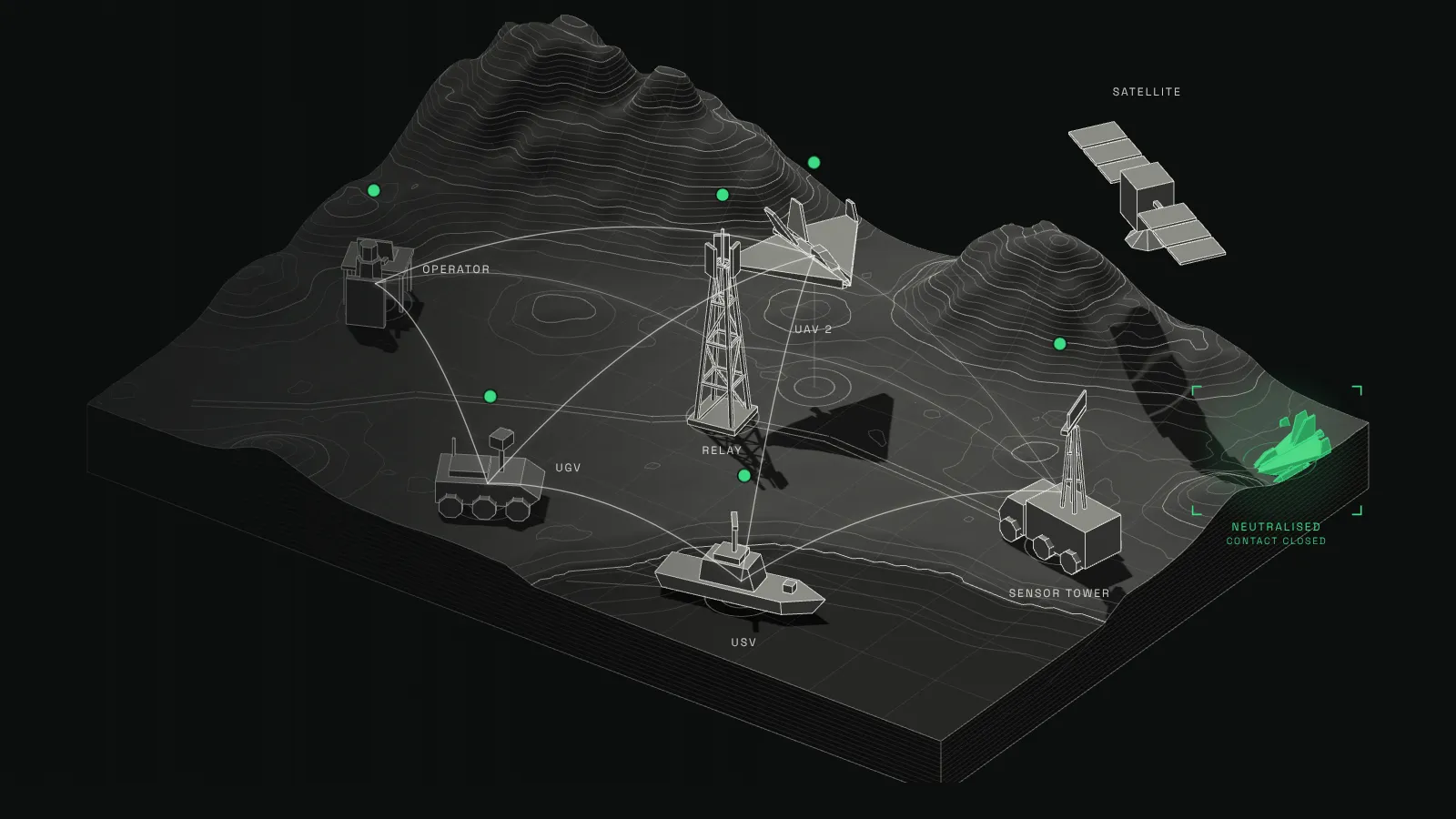
Mission Network
Mission OS connects operators, sensors and autonomous platforms through a peer-to-peer network that shares mission state across the force. It enables distributed tasking, coordinated execution and edge-level decision-making across heterogeneous systems, without making every action dependent on central command.
Share mission state directly across network nodes.
Integrate RF and tactical links, 5G/LTE, SATCOM and in-service radio systems.
Sustain coordination through intermittent connectivity and degraded communications.
Share mission state directly across network nodes.
Integrate RF and tactical links, 5G/LTE, SATCOM and in-service radio systems.
Sustain coordination through intermittent connectivity and degraded communications.
By the numbers
Scale01
500+ UXV and C-UXV effectors held by one operatorSpeed02
<1 Second from one case on the ground to first task awaySignature03
0 RF emissions required in silent operating modeReach04
4 Domains under one tasking layer and one authorityHow Mission OS Operates
Define mission objectives, operating constraints, assets and task relationships across the force.
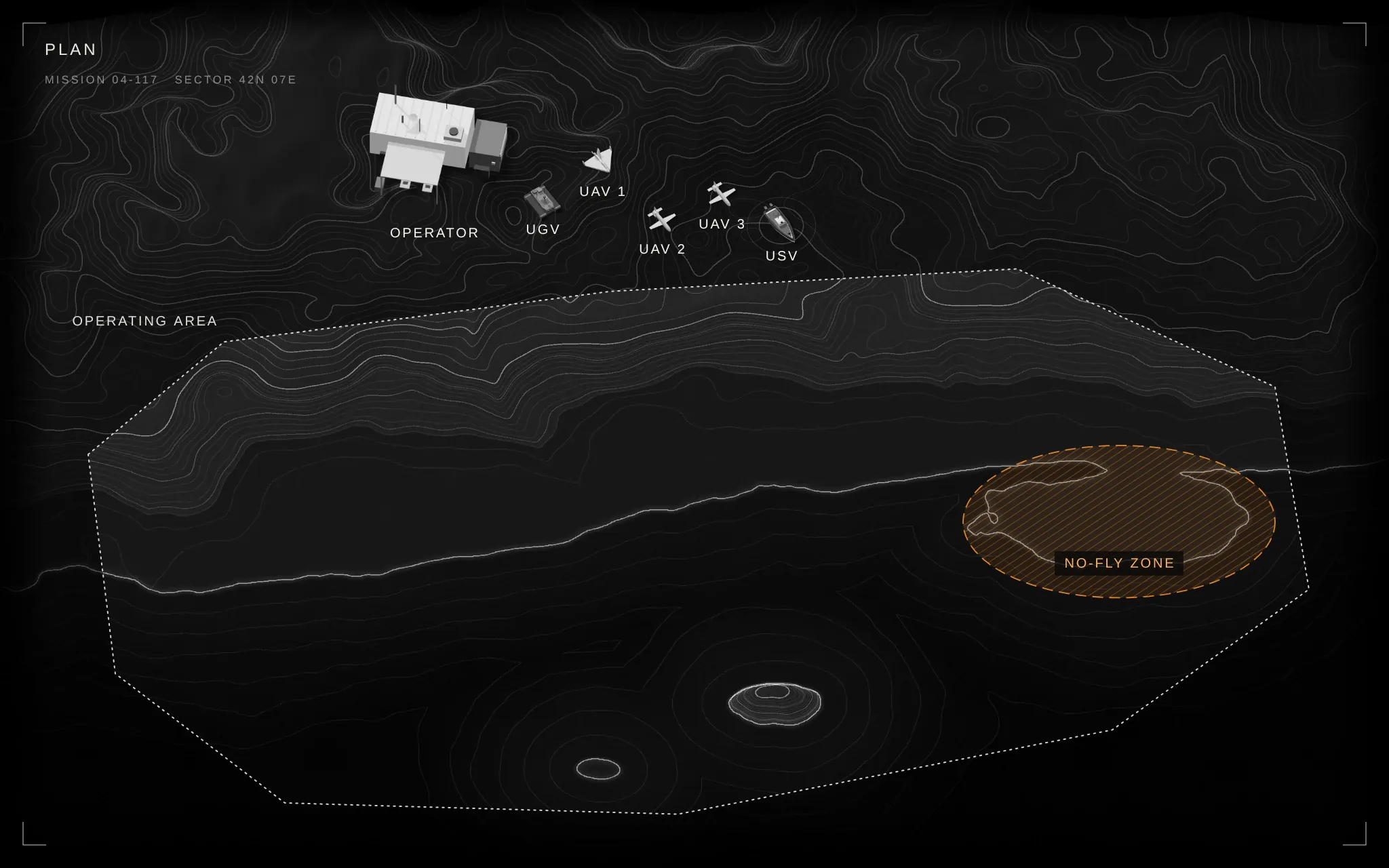
Dynamically assign and reassign assets based on mission objectives, platform state and available capability.
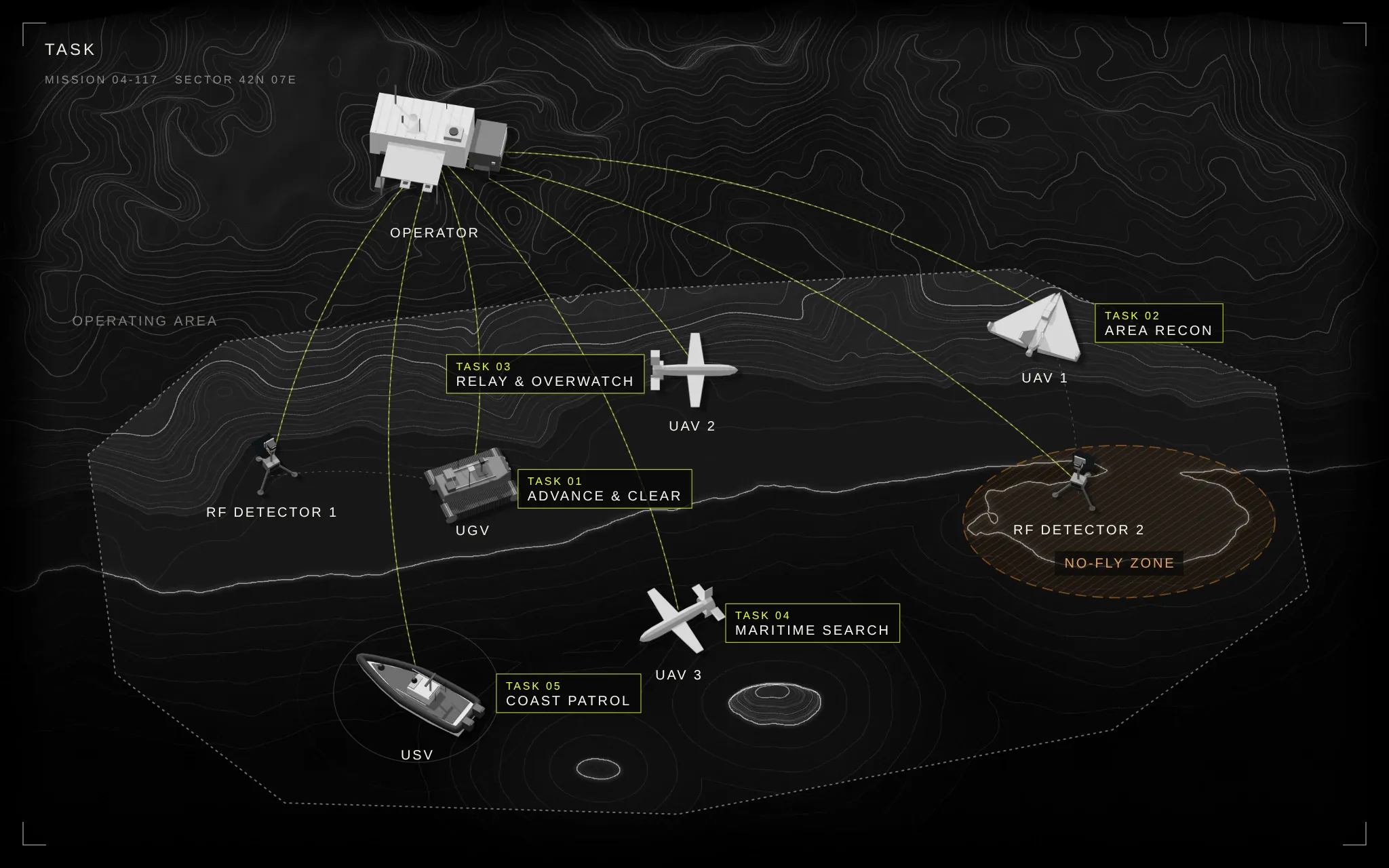
Interpret the fused picture to identify changes, activity and emerging conditions across the mission.
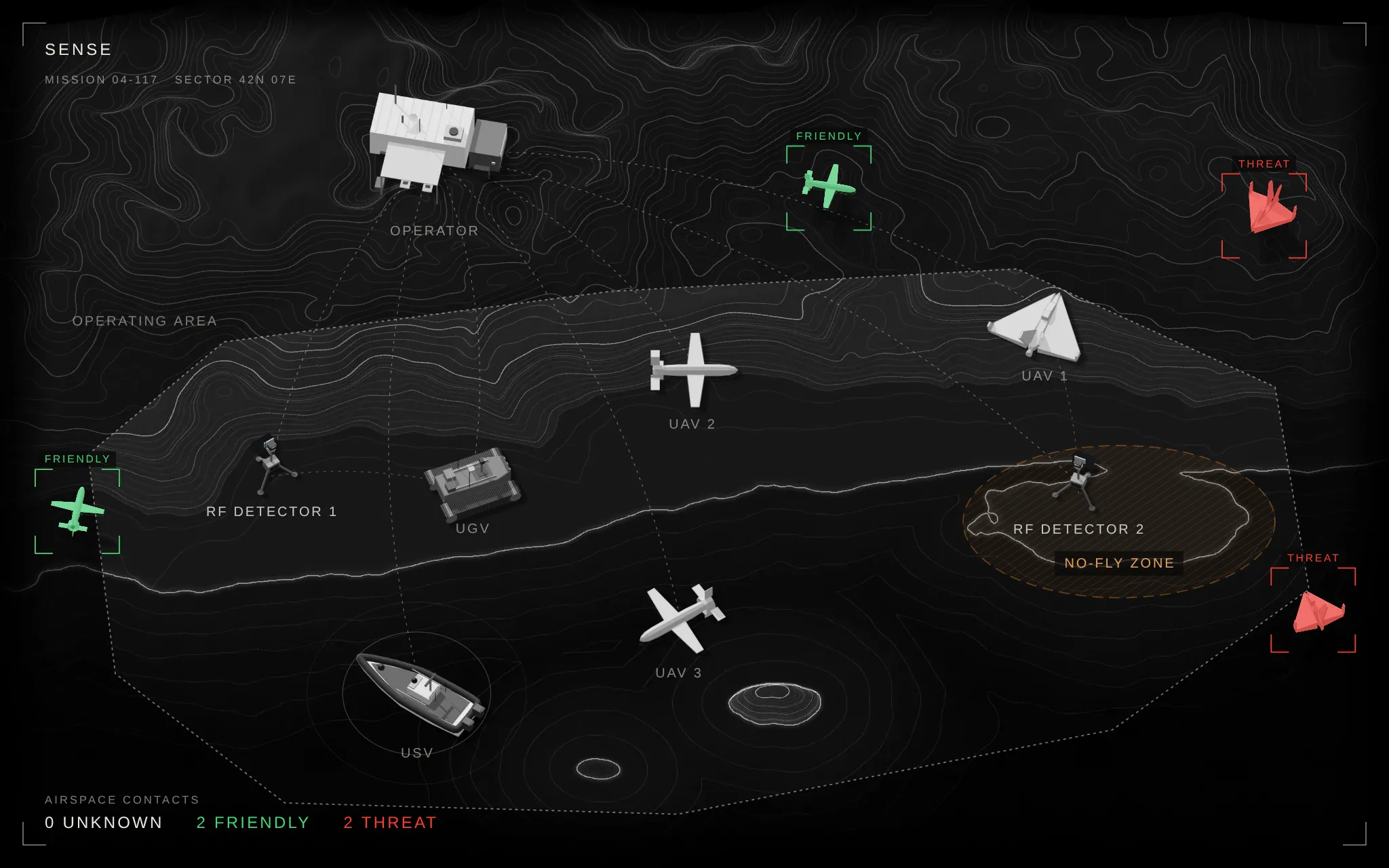
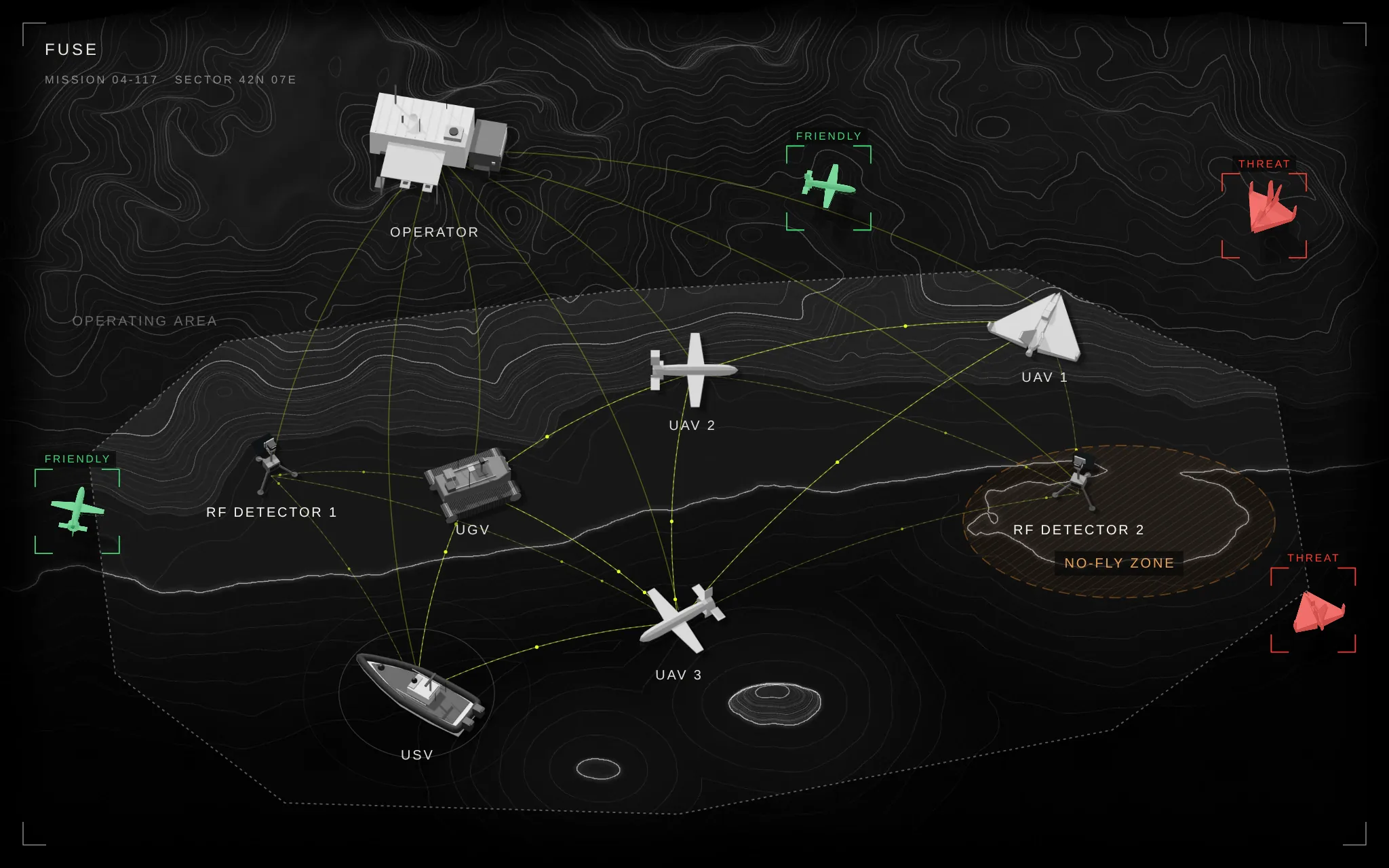
Correlate telemetry, sensor inputs and mission context to maintain a shared operational picture.
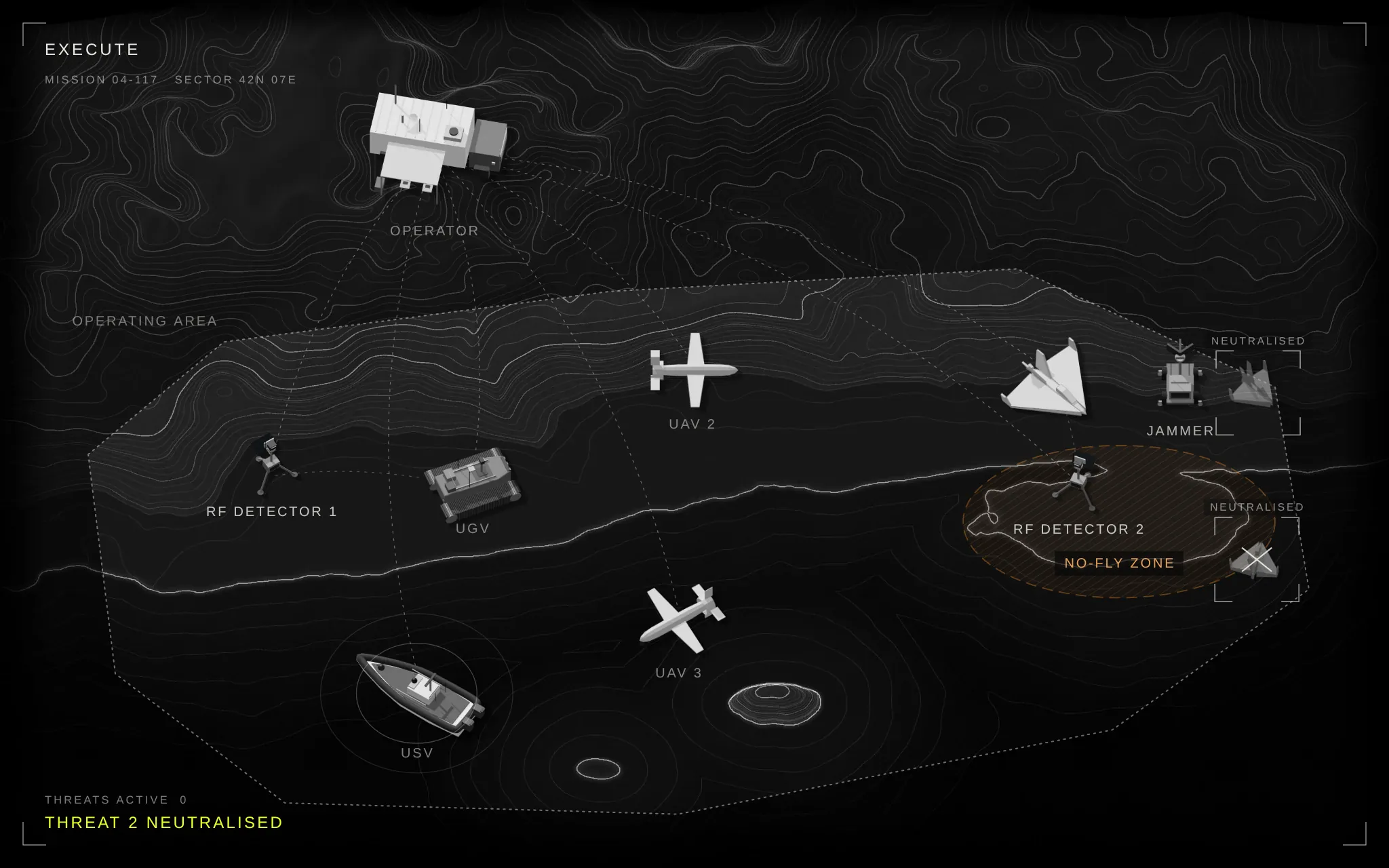
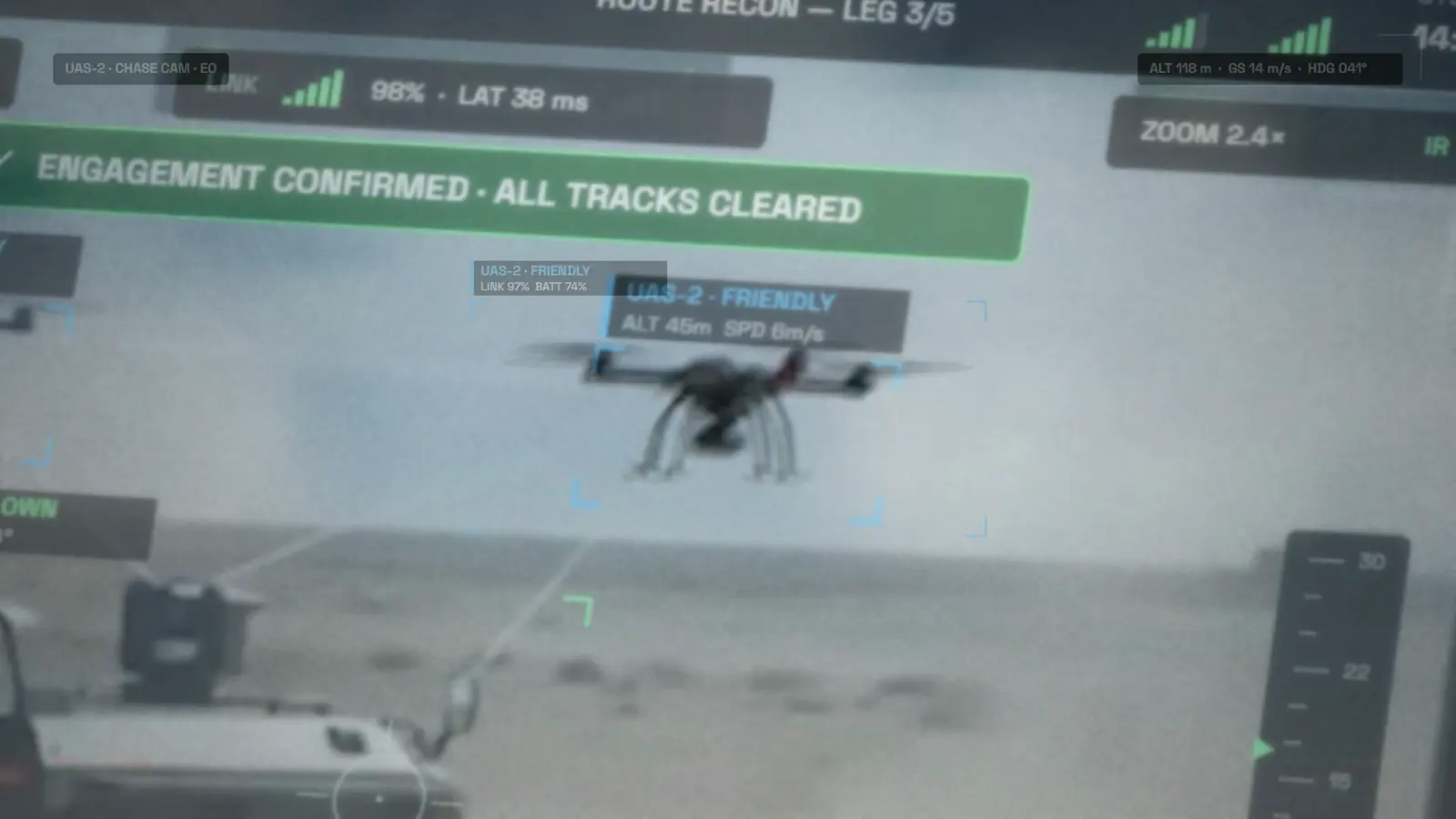
Push defined tasks and mission logic to the edge, allowing assets to continue operating through link degradation or loss.
Mission Autonomy
Mission OS translates mission intent into executable tasks across heterogeneous platforms. Edge agents handle defined tactical actions locally, while mission policies and command authority govern how those actions are executed.
Edge-to-Edge Mesh
SCOUT, Driif’s Edge Agent, brings mission logic and execution onto autonomous platforms. Assets continue supported onboard functions when links to central command are disrupted, while the peer-to-peer mesh enables coordination across available nodes.
Peer-to-peer mission state sharing. No single point of dependence.
Mesh failover maintains state synchronisation through jamming, dropouts and air-gapped operation.
Silent operation with zero RF emissions.
One mesh across RF and tactical links, 5G/LTE, SATCOM and in-service Army radio.
Adapts links in electronic warfare environments.
Lightweight deployment across large numbers of low-cost autonomous systems.
Products
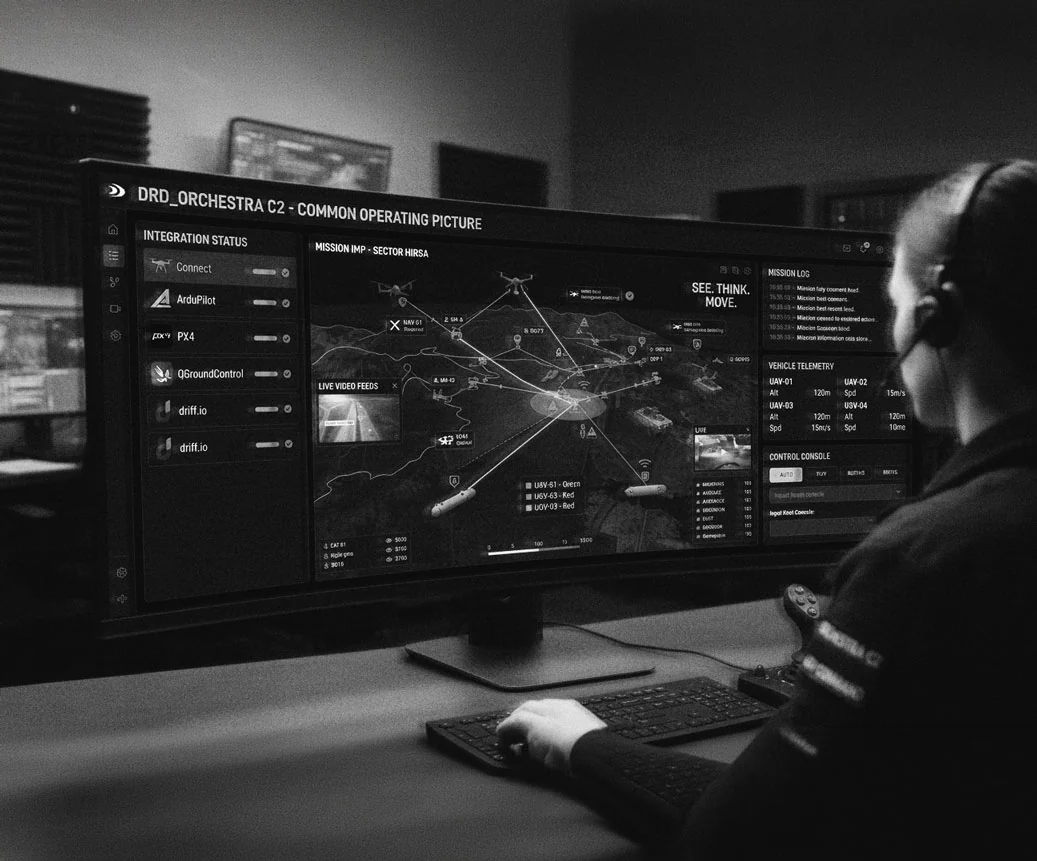
Mission OS for UXVs
Turn heterogeneous UXV systems into a coordinated mission force under one operational picture.
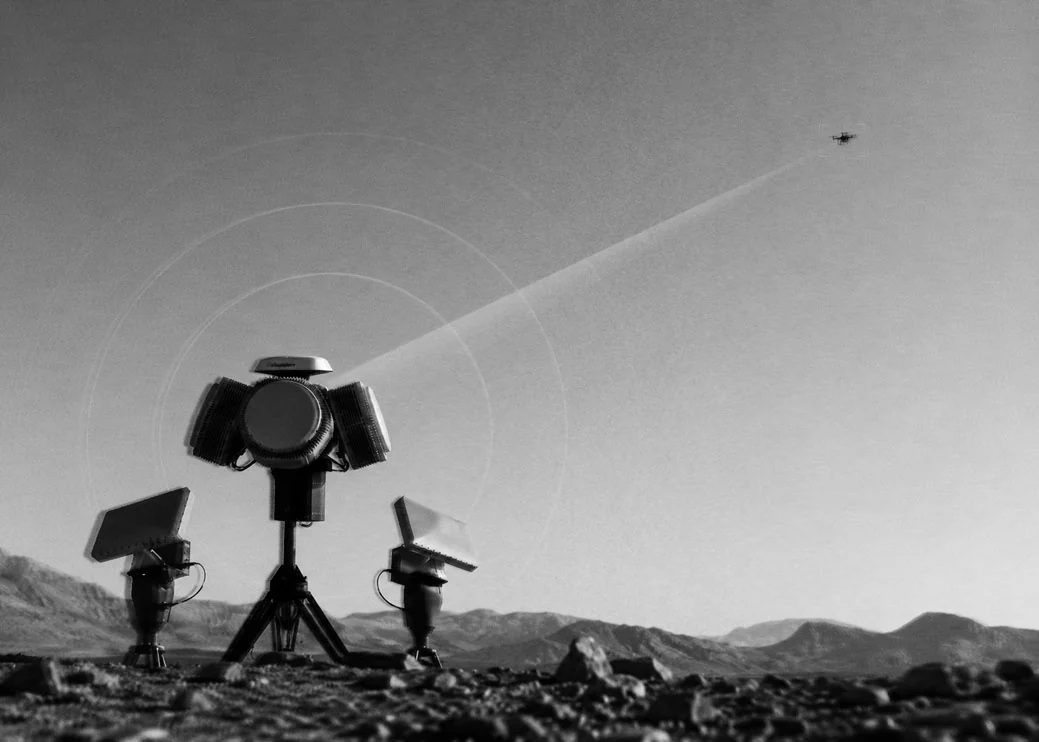
Mission OS for Counter-UXVs
Transform distributed sensors and effectors into a coordinated air defence system for faster, mission-aware response.
Deployments
Mission OS Deployment
Driif Mission OS is designed to operate across command infrastructure, existing manned platforms and portable field configurations.
Whether integrated into a deployed asset or accessed through a man-portable C4 configuration, the same mission layer connects operators, autonomous systems and distributed assets within a unified operational network.
One mission layer · Driif Mission OS
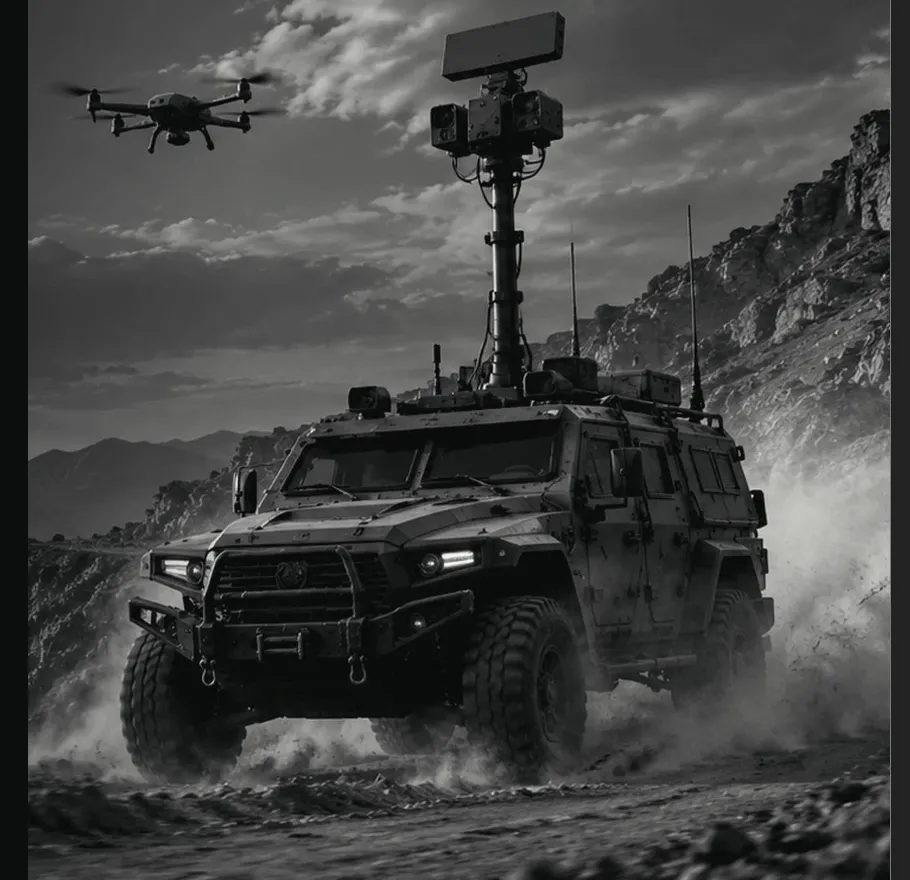
Deployment configuration01
Extend existing platforms into connected command nodes.
Integrate Driif Mission OS into existing manned platforms to extend their role within autonomous operations. Existing assets can function as command nodes, connecting operators with unmanned systems and enabling coordinated mission-level sensing, tasking and execution.
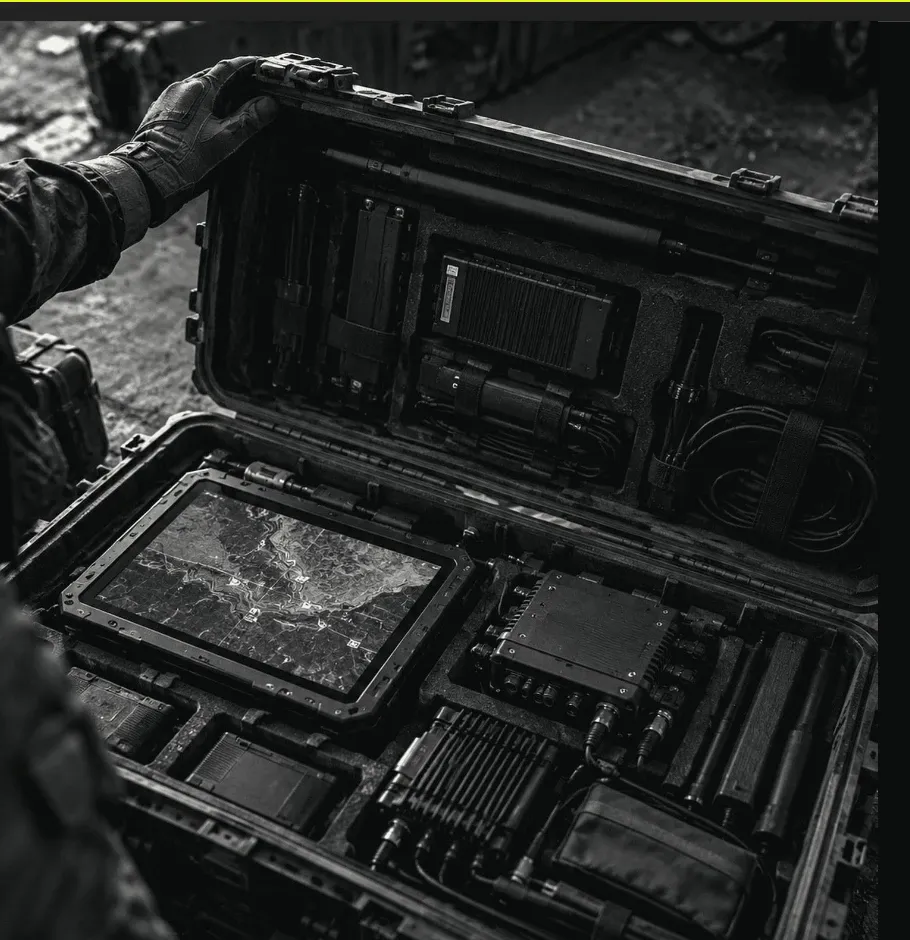
Deployment configuration02
Mission coordination at the point of execution.
Deploy Driif Mission OS through a portable field configuration, giving operators access to the mission network beyond fixed command infrastructure. Monitor connected assets, access operational information and coordinate mission activities from the field.
Glossary
UAS, IFF, C-UAS, swarming: the vocabulary around multi-domain autonomy moves fast. Our glossary defines the terms that matter in plain language, with a short quiz to test what stuck.
Explore the glossaryGet Started
We integrate what is already fielded. Nothing is replaced.
Request a demo